


Tooth decay causes pain and disrupts daily life for more than 2.5 billion people worldwide, making it the most common non-communicable disease on the planet. Yet maintaining good oral health still depends on things many people can’t reliably access: water, a toothbrush and toothpaste.
Toothpod, a dental chew developed by Vishar Yaghoubian (BSc 2023), is trying to change that. This peppermint-flavoured tablet interacts with saliva rather than with the teeth to protect tooth enamel – the hard outer layer that shields teeth from damage and cavities.
Early studies suggest it reduces acid in saliva while releasing a calcium-rich mineral that helps strengthen enamel. Researchers have also found decreases in harmful bacteria, associated with reductions in cavities, gum inflammation and bad breath. “It allows you to think about oral hygiene differently,” Yaghoubian says.
The idea took shape during Yaghoubian’s first year, when she entered a problem-solving contest organized by The Hatchery – the accelerator based at U of T’s Faculty of Applied Science and Engineering. While researching potential topics, she was struck by how persistent and widespread cavities remain globally. Her concept for a dental chew earned second place – and, she says, crucial validation.
Determined to understand the science behind oral health, Yaghoubian reached out to dental instructors and chemists across the university and worked with U of T’s entrepreneurship and innovation ecosystem to develop and commercialize her idea.
Along the way, she met Brian Webb, then a biomedical engineering PhD candidate. Initially joining as an intern, Webb eventually became a partner and chief scientific officer as the scope of the project – and his commitment – grew.
One of the team’s biggest challenges was getting the formula right. Yaghoubian and Webb experimented with hundreds of liquids and powders in her home kitchen before testing Toothpod at U of T’s Faculty of Dentistry and later refining the formula with a food scientist and a private lab.
To date, Yaghoubian and Webb have raised more than $450,000 and produced more than half a million tablets.
The team is currently seeking a natural product number from Health Canada, which, if granted, would allow Toothpod to be sold more widely across Canada. In the U.S., it is considered a dietary supplement. Dental Care Alliance supplies Toothpod to 400 dental practices in 24 states, to give to their patients.
Toothpod is patent-pending and undergoing clinical trials at a Boston university to assess whether it leads to sustained reductions in gum inflammation and plaque.
“People experience significant dental pain, Yaghoubian says. “If this can change how even a small fraction of people care for their teeth, I think that’s meaningful.”
Most Popular

She Designed a Water-Purifying Molecule at 17
Now a U of T student, Diana Virgovicova is using AI to help tackle global water pollution Read More
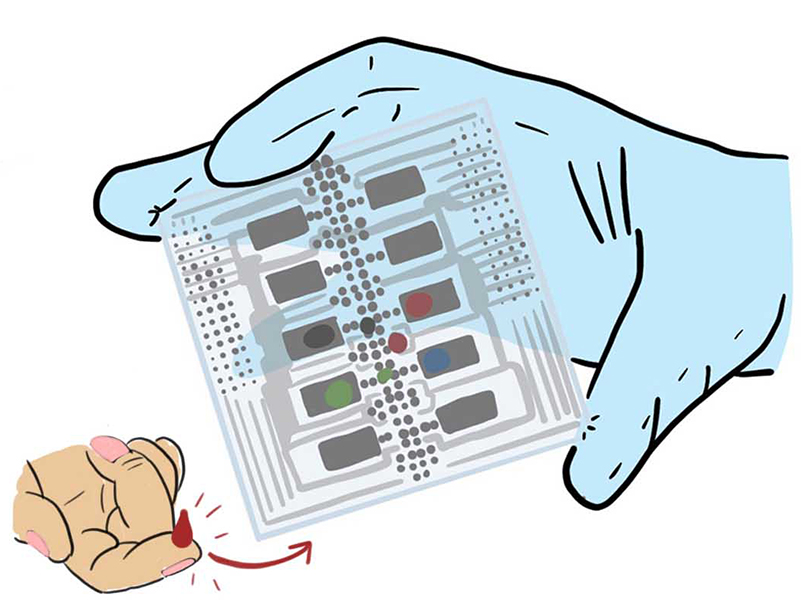
A New Way to Monitor Heart Patients
“Lab on a chip” technology will reduce travel expenses and improve care for those living in remote communities Read More

No Responses to “ A New Way to Protect Your Teeth ”
This problem already has a solution: fluoride in the tap water and fluoride supplements.
Sounds like the best thing since wool socks!
I tried to purchase this product to support a local Canadian company but it's subject to almost 20 per cent tariffs, as it's manufactured and sold from the U.S. This was a bit disappointing, combined with the "four-week minimum delay" in shipping. I wish them luck but I hope they can get their items manufactured in Canada.
As mentioned, dental health is one of the crucial elements of overall human health. Dental disease is a proximate cause of heart disease among other harms. If this innovation survives its clinical trials and proves to be effective in reducing dental health problems the world will be a healthier place through effective prevention.
It all seems terrific if it works as it says in this article. Would like to try it when it becomes available.
I hope this development succeeds. More emphasis on dental hygiene is needed. There seems to be inadequate promotion of personal dental care that would lessen the need for visits to the dentist for expensive repair work.