

It’s as small as a milk carton, but this 3.5-kilogram “nano-satellite” is loaded with innovative experiments. Unveiled in August at U of T’s Institute for Aerospace Studies, the CanX-2 (Canadian Advanced Nanospace eXperiment 2) satellite is expected to be one of the smallest research platforms in space. To be launched in 2006, it will carry and test small low-power devices, including a mini-spectrometer that measures greenhouse gases.
CanX-2 lays the groundwork for flying a formation of two more advanced nano-satellites, CanX-4 and CanX-5, in 2008. Formation-flying technology could one day find large, expensive satellites replaced by groups of smaller, cheaper collaborating satellites. “With advances in microelectronics and power technologies, satellites can be made really small but still able to achieve important missions,” says Robert E. Zee, manager of the institute’s Space Flight Laboratory. The price tag for CanX-2 and the CanX-4/CanX-5 formation-flying mission is $1 million, compared with the hundreds of millions of dollars typically spent on space missions.
Recent Posts

People Worry That AI Will Replace Workers. But It Could Make Some More Productive
These scholars say artificial intelligence could help reduce income inequality
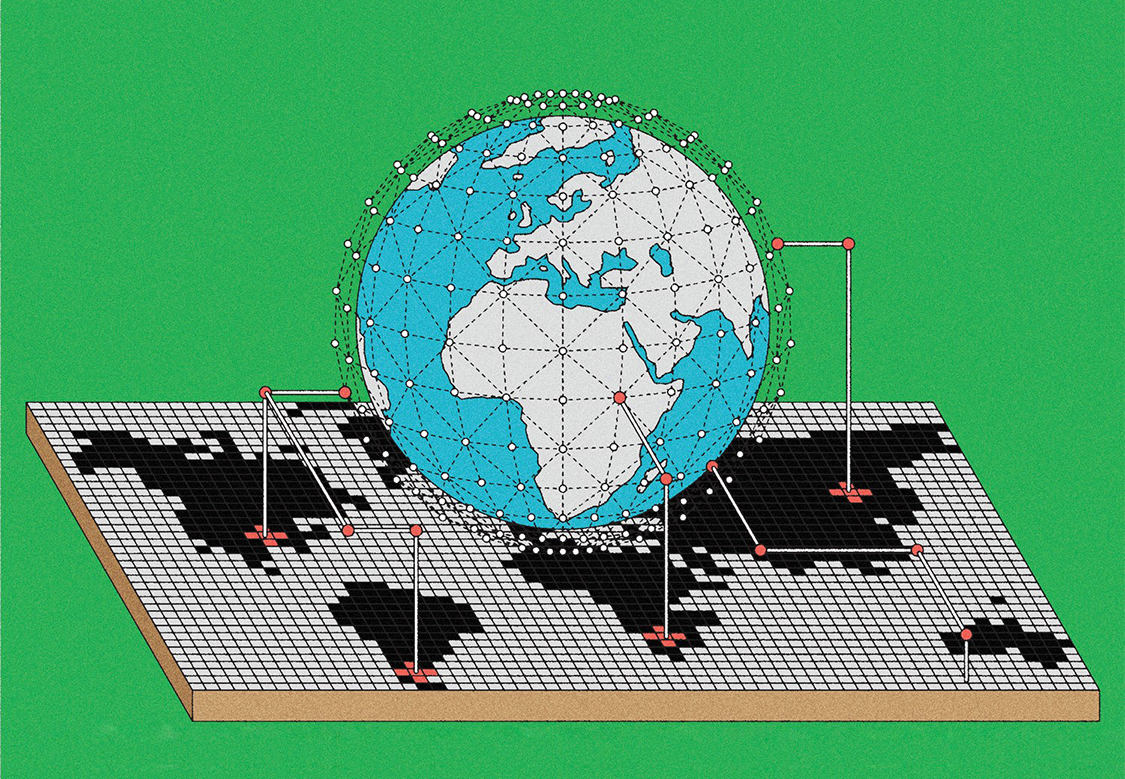
A Sentinel for Global Health
AI is promising a better – and faster – way to monitor the world for emerging medical threats

The Age of Deception
AI is generating a disinformation arms race. The window to stop it may be closing