


Photo by Sarah Wright; retouched by Daniel Hearn; lighting by Ro Agalawatte
Big Country, Big Ideas
Unapologetically bold solutions for a better Canada

Canada stands at a crossroads. In this issue, U of T experts explore solutions to strengthen health care, protect the North, and expand our global impact. They show how sustainable technology, fair housing, and justice for Indigenous Peoples can shape a stronger, more resilient country – and chart the path forward for all Canadians.
Update the Canada Health Act

They arrived before the sun. On a snowy January morning in Walkerton, Ontario, hundreds of people began 2025 by lining up, bundled in scarves and winter coats, hoping to score the hottest ticket in town: the chance to register with a family doctor.
 The crowd represented only a fraction of the more than six million Canadians who currently lack a family physician, and their presence was a stark reminder that, despite its reputation, the country’s universal health-care system has gaps big enough for millions to slip through. Read the full article
Invest in Innovation

 In a chaotic moment when decades-old alliances and trade relationships have been upended seemingly overnight, Canadian leaders face a generational question: how can our country earn influence in a rapidly changing world order? Read the full article
Advance Justice for Indigenous Peoples

 Canada has taken steps toward reconciliation with Indigenous Peoples, but justice remains unfinished work. Here, Indigenous legal scholars John Borrows and Douglas Sanderson, and political scientist Sheryl Lightfoot speak with University of Toronto Magazine editor Scott Anderson about what’s been achieved, where the country is falling short and how to bring about lasting change. Read the full article
Build Homes for Everyone

 This past spring, Ben Rayner, a former Toronto Star reporter and music critic, found himself homeless. A combination of depression, separation from his partner and prioritizing time with his young daughter had lowered his income. Then, a sudden $650-a-month rent increase dealt the final blow. Rayner was formally evicted and began couch-surfing. At his hearing before the Landlord and Tenant Board, he was told that it’s not a landlord’s job to be moral.
Rayner’s story is a stark illustration of how acute Canada’s housing crisis has become. Read the full article
Turn Waste into Wealth
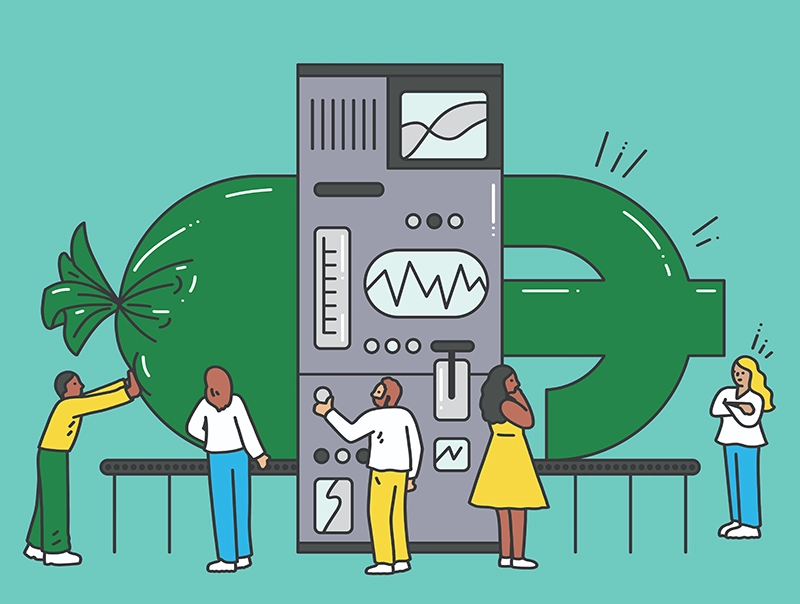
The race for global leadership in sustainable energy is also a race for critical minerals – the essential elements in electric vehicles, renewable power systems and other green technologies. These resources are unevenly distributed across the planet, concentrated in just a handful of countries, and geopolitics often dictates access.
 Canada, however, has an advantage. Many of the materials identified in the federal government’s 2024 critical minerals strategy (part of a larger climate plan) can be mined domestically. Yet mineral extraction is expensive and environmentally disruptive; resources are finite. As global demand soars, the urgency of reclaiming and recycling critical minerals grows. To lead in sustainable energy, Canada must rely as much on its researchers as its miners. Read the full article
Lead the Way in the Warming North


Since Canada’s founding, the Arctic has played a major role in the country’s conception of itself. Now, a warming climate is changing the environment, the economy and the politics of the region. U of T researchers say that Canada needs to rise to the occasion or risk being left behind by international competitors.
“I think there is a need for a reconceptualization of how we view the Arctic,” says Aurel Braun, a professor of international relations and political science at U of T Mississauga and the St. George campus.
“It’s part of our identity. We need to understand that this is something that is crucial to us, in economic terms, in terms of national security, in terms of the environment,” he says. Read the full article.
Plus: see how U of T’s Mason White is pioneering architecture shaped by the North — and for the North.
Most Popular

For a Century, This School Has Put Children First
How U of T’s Dr. Eric Jackman Institute of Child Study continues to rethink what education is for Read More

Teaching AI to Think Like a Lawyer
A platform created at U of T speeds up legal reasoning without replacing human judgment Read More

She Designed a Water-Purifying Molecule at 17
Now a U of T student, Diana Virgovicova is using AI to help tackle global water pollution Read More
No Responses to “ Big Country, Big Ideas ”
Dr. Hilal Al Hashami (post-graduate medical training, clinical fellow, 2013) writes:
Thank you for an excellent issue of U of T Magazine.
I lived in Canada for two years during my fellowship training at Toronto’s SickKids Hospital. I was there with my family, and we had a wonderful time. Canada is a great country — and should remain one. I’d like to share a few ideas.
Canada should focus on strengthening both domestic and international tourism and make it easier for visitors to obtain visas. It’s a big country with the potential to be a food basket for the world. Canada should also expand trade with Africa, Asia and the Middle East. Finally, fostering cultural diversity — including greater recognition of Indigenous Peoples — is important.
Dr. Leonard Prins (MD 1992) writes:
I am seriously considering leaving Canada. After graduating from U of T with a medical degree, I have spent 32 years working in family practice in a rural community. Yet Canadians continue to elect leaders who pander to insecurity — Justin Trudeau being a prime example — and as a result, the country is in decline. I’ve lived modestly, saved carefully, and am now looking for a new place to call home.
Brian Henderson (BA 1977 Woodsworth) writes:
Principles for a just society:
– Live within your means. Save when times are good so you have resources when they’re needed. Many Western countries would face financial crisis were it not for large-scale money creation and debt purchasing – a trend Ray Dalio explores in The Changing World Order (2021).
– Maintain a strong work ethic. There should be a minimum wage, but not a guaranteed income. Everyone can contribute in some way.
– Take individual responsibility.
By these measures, recent liberal policies have fallen short.
A very interesting and useful issue. Thank you for sending it. A suggestion: it might also be of interest to ask U of T's graduates from around the province, the country and the world to contribute articles.