


Innovation usually begins with a stubborn problem: cancer cells that resist treatment, students who aren’t being heard, patients who slip through the cracks, records that can’t be found when they’re needed. Across the University of Toronto, researchers and alumni are rethinking how things work. Some are using artificial intelligence to measure what once seemed immeasurable. Others are redesigning materials, tools and experiences from the ground up. What connects them is a shared ambition: not just to invent something new, but to make it matter.
AI Can Be Used However We Want. We Need to Think Bigger

Canada creates remarkable talent in artificial intelligence. Our universities produce world-class research. Our startups attract global customers and investment. Governments craft AI strategies and fund initiatives.
And yet, when it comes to using AI to solve the problems Canadians care most about, progress has been limited.
The issue isn’t technology. It’s ambition. Read the full article
How U of T is Powering Startup Growth in Canada

It was one of those classic entrepreneurial moments, when an ordinary daily irritant becomes the spark for a startup. For Abdel Ali, inspiration struck after he tried – and failed – to persuade his condo building manager to install an electric vehicle (EV) charging port near his parking spot. The building’s electrical system couldn’t support new infrastructure, and his space wasn’t against a wall, ruling out a standard fixed unit. Another solution would have been prohibitively expensive and impractical. “I realized it was basically impossible,” he says.
Most people would have given up at that point, but Ali, founder and CEO of Kiwi Charge, didn’t let it go. Read the full article
Teaching AI to Think Like a Lawyer

In practice, tax law often turns on questions that look deceptively simple. Is a worker an employee or a contractor? Does a transaction qualify as business income or a capital gain? For lawyers and accountants, answering them can mean hours of combing through case law, weighing precedent and judgment calls that rarely resolve neatly.
In theory, artificial intelligence should be well suited to that kind of work. “Law is fundamentally a system of prediction,” says Benjamin Alarie, a professor and Osler Chair in Business Law at U of T’s Henry N.R. Jackman Faculty of Law. “If you know the facts, you should be able to predict the legal outcome.” Read the full article
For a Century, This School Has Put Children First

When the Institute of Child Study opened its doors in 1925, the idea that young children might learn best through play, observation, and carefully structured freedom was radical. Nursery schools were controversial. The notion that children could be entrusted to trained educators – rather than remaining solely in the care of their mothers – was, to some, almost immoral.
What distinguished the Institute of Child Study from the start was its experimental orientation. Everything that happened in its classrooms was meant to be studied, understood and improved. Read the full article
How To Engage Today’s Students? Try An Escape Room

Inside Victoria College on the University of Toronto’s St. George campus, a room has been transformed into an 18th-century sailing ship. At the Temerty Faculty of Medicine, a cartoon avatar guides students through the human body. And at U of T Mississauga, a new outdoor site will soon let students walk through geological time.
These initiatives are part of a broader wave of U of T educators rethinking what a classroom can – and should – do. Across the three campuses, many are exploring creative ways to engage students and deepen learning. Read the full article
Enter the Simulation

Audience members don’t just watch [EOL]. End of Life – they inhabit it. Wearing VR headsets, they move through abandoned virtual landscapes, deciding which digital traces of past lives to preserve or delete.
Created by U of T Mississauga theatre and drama studies alum Victoria Halper (BA 2010) through her Vienna-based company DARUM, the immersive production reimagines theatre as participatory. Halper describes the experience as more communal – and more powerful – than exploring a digital world alone at home. “When audience members come out of it, they’re so happy to see you again – a human connection after an intense virtual encounter,” she says.
For playwrights, she adds, creative limits almost disappear: “VR is anything you want.” — Kate Martin
A New Chair for the Next Stage of AI

The University of Toronto has established the Hinton Chair in Artificial Intelligence, a landmark initiative designed to accelerate the next wave of breakthroughs in a technology that is already reshaping daily life.
Backed by a $20-million investment – $10 million from Google, matched by the university – the endowed chair will support the recruitment of a globally recognized AI researcher whose work will extend the legacy of Geoffrey Hinton, the U of T professor emeritus and Nobel laureate widely regarded as a pioneer of artificial intelligence. Read the full article
Every Crime Has a Footprint. The Challenge Is Finding It
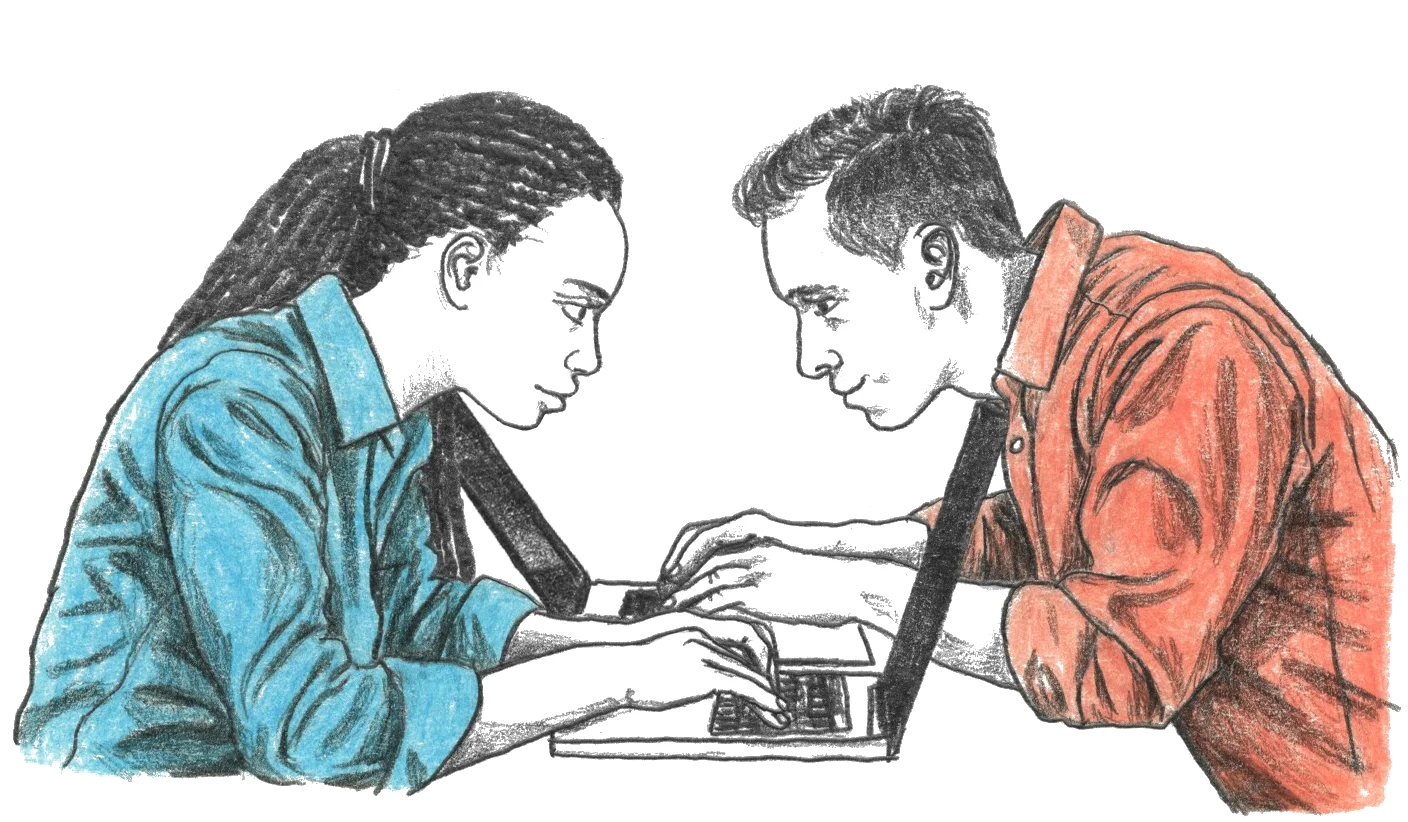
At U of T, students aren’t just studying artificial intelligence – they’re using it to track global crime.
Each year, hundreds of students analyze financial transaction data to detect criminal activity in a competition organized by UTM’s Institute for Management and Innovation. Read the full article
U of T Startups Take the Spotlight at True Blue Expo

Glowing screens, experimental prototypes and clusters of young founders filled three floors of the Schwartz Reisman Innovation Campus as dozens of ventures gathered for the largest True Blue Expo yet.
The annual showcase brought together 75 startups from U of T’s entrepreneurship network – a system of campus accelerators and programs designed to help founders move from ideas to viable companies. The ventures on display spanned AI, health care, cleantech, advanced manufacturing and more. Read the full article
What If Farms Didn’t Need Soil?

New grow walls in U of T Scarborough’s greenhouse are changing the way plants are cultivated, allowing crops to sprout upward in a compact, soil-free system.
The recently installed walls use hydroponic technology to produce herbs, leafy greens and other crops without soil. Read the full article
Never Lose Your Records Again

The idea behind TransCrypts, a blockchain startup co-founded in 2020 by Zain Zaidi and Ali Zaheer (BA 2021 UTSC), began with a familiar frustration: proving that you’ve earned the credentials you worked so hard to obtain.
Zaidi ran into this dilemma while applying for a graduate program at Harvard. With a deadline looming, he learned the university hadn’t received his undergraduate transcript and diploma – paper documents sent by mail. Read the full article
A Hands-on Lesson in the Science of Snow

If you want to really understand snow, you have to go where the drifts are deep and the cold wind blows.
Students in a third-year geography course on Canada’s frozen environments at U of T Mississauga did just that in February, travelling to Lakefield, Ontario, to analyze a winter landscape firsthand. Read the full article
No Bad Seats

Located inside the Sam Ibrahim Building at U of T Scarborough, this 500-seat, campfire-style classroom is built for interaction. Its hexagonal layout surrounds a central podium, so the furthest seat is just seven rows from the front. Six large, wraparound screens display what’s on the instructor’s tablet, giving every student an equal, immersive view. The design breaks from the traditional lecture model, encouraging discussion and collaboration. Arrow Group Innovation Hall is named after the Arrow Group of Companies, founded by Sam Ibrahim, whose $25-million investment made it possible. — Don Campbell
Building a Better Way to Assess Kids’ Language Skills

In 2021, during the COVID-19 pandemic, U of T education scholar Eunice Eunhee Jang was researching how AI could improve language testing when she met a newcomer family from China who feared their Grade 4 daughter’s communication skills had suffered during school closures.
Using BalanceAI, the literacy assessment platform she was developing, Jang evaluated the student and found typical development patterns, along with clear abilities in cognitive understanding and reading – and a need to improve her oral language. Read the full article
Rethinking How Materials Are Made

A smartphone screen has two frequently incompatible jobs: it needs to be transparent to let light through so the user can see the display and it needs to conduct electricity so the user can control it via touch.
Transparent materials are common, as are conductive ones. But few substances are both – and a limited number are suitable for consumer electronics. Read the full article
Poll: Would You Ever Start Your Own Company?

Future founders in the making? Quite possibly. A majority of U of T students told us they’d consider starting their own company one day – for the freedom, the creativity or the chance to revive a previous idea. Read the full article
Most Popular

What Really Makes Surgery Safer
By analyzing operating-room “black box” data, researcher Patricia Trbovich is showing that better systems – not just better surgeons – prevent harm Read More

A New Way to Protect Your Teeth
A U of T alum’s dental chew aims to tackle one of the world’s most widespread – and overlooked – health problems Read More

The Story Behind Ozempic
A scientific detour reshaped how we treat diabetes and obesity Read More