


When Daniel Drucker began studying a little-known gut hormone in the 1980s, it wasn’t clear where the work would lead. Decades later, his research would help lay the foundation for GLP-1 drugs that are now transforming the treatment of diabetes and obesity – a powerful example of how discovery can evolve into real-world impact.
This issue explores that journey from idea to impact. In the stories below, we focus on something that touches us all: our health – as individuals and as communities.
The Discovery That Led to Ozempic

Daniel Drucker’s path to a discovery that would transform millions of lives began not with a breakthrough – but a setback.
It was 1984. Newly arrived at Harvard Medical School for a research fellowship, Drucker planned to study thyroid disease – an interest he had developed as a University of Toronto medical student and later as a resident at Toronto General Hospital.
Instead, his supervisor, Joel Habener, delivered unexpected news: the lab was phasing out its thyroid program. Drucker would be studying glucagon, a hormone that regulates blood sugar. Read the full article
What Really Makes Surgery Safer

When something goes wrong on a plane, investigators turn to the black box. Now, a similar tool is being tested in operating rooms – where researchers review synchronized video, audio and physiological data to gain a better understanding of what happens during surgery. Read the full article
How to Clean Water Using AI and Light

Diana Virgovicova started dreaming about making a big scientific breakthrough as a youth. On a backpacking trip in her teens, she saw the black, waste-filled rivers of Mumbai and decided she wanted to help clean the world’s water.
Back home in Slovakia, she connected with researchers investigating photocatalysts – materials that have long been used with ultraviolet light to purify water. Within a few years, she had taught herself to use quantum chemistry software and modelled a new type of photocatalyst that only needs visible light to work. Read the Q&A with Virgovicova
A Better Way to Build Cancer Drugs?

Late last year, doctors at the Princess Margaret Cancer Centre in Toronto administered the first dose of an experimental drug to a cancer patient.
That dose marked the start of human trials for PQ203 – and a major milestone for ProteinQure, the biotechnology startup behind it. If successful, PQ203 could be the first in a new class of treatments for cancer and other diseases. Read the full article
Everybody Dance Now

It started with the chicken dance. Then came a move-to-the-beat challenge – and plenty of two-stepping.
Not moves typically associated with social work. But Jake Bradshaw is reimagining what group programming in shelters can look like, showing future social workers that all it takes is a good playlist to get started.
Bradshaw, a master’s student at the Factor-Inwentash Faculty of Social Work and a researcher with the Youth Wellness Lab, was sharing findings from a study that brought dance workshops to youth experiencing homelessness in Toronto.
By engaging young people in movement, the program offers a low-barrier, joyful path to well-being. “Dance can engage young people in something that’s fun,” Bradshaw says, “and they may not even realize it’s supporting their mental health.” — Mariam Matti
AI Gives Doctors a New Way to Track Brain Health

If you have diabetes, there are markers doctors can use to track your condition. With diseases of the brain, it’s far more difficult. While there are general symptoms – dizziness, fogginess and exhaustion – it’s not clear how they relate to brain function. Is the patient improving? Getting worse? Clinicians often can’t say.
Cove Neurosciences aims to close this gap. Read the full article
Is the Land Still Safe?

For Indigenous peoples living in northeastern British Columbia, traditional foods are more than sustenance – they are integral to their culture, history and health. But for some families, the food harvested from the land or water comes with questions.
Recent dramatic growth in hydraulic fracturing, or “fracking,” which releases chemicals into the environment that can harm human health, has raised concerns about how safe it is to consume animals and plants in Peace River Valley. Read the full article
Better Diabetes Screening – and Faster Access to Care

Peel Region has some of the highest rates of type 2 diabetes in Ontario – in some neighbourhoods, more than double the provincial average. This is because the area is home to one of Canada’s largest South Asian communities – a population that faces a higher and earlier risk of the disease due to genetic and metabolic factors.
Yet many residents remain undiagnosed. Read the full article
Putting Innovation to Work

In recent months, I’ve found myself thinking more concretely about what it means for the University of Toronto to “meet the moment” – not as a slogan but as choices about where we direct our energy, talent and resources right now.
There is no single answer. We are meeting this moment in many ways – recruiting exceptional people from around the world, rethinking degrees for a rapidly changing economy, and improving how discovery translates into real-world benefit. But few areas bring the urgency of this work into sharper focus than artificial intelligence. Read Melanie Woodin’s complete President’s Message
The Gut Health Test That’s As Simple As Looking Down

For people with inflammatory bowel disease, monitoring gut inflammation usually means invasive colonoscopies or collecting stool samples for lab analysis. Caitlin Maikawa, an assistant professor at U of T’s Institute of Biomedical Engineering, co-developed PRIM – a swallowable pill that releases harmless blue dye when it detects inflammation in the intestines. If your gut is inflamed, your toilet water turns blue.
The pill, which would cost less than 50 cents to produce, could offer a simple at-home alternative for the seven million people worldwide living with IBD. Earlier detection of flare-ups means doctors can adjust treatments faster, potentially preventing serious harm and improving quality of life. — Staff
Understanding Repetitive Behaviours in Autism

Using markers, scissors, fidget spinners and other “stim” tools, participants in this Blackwood Gallery workshop intently trace and collage patterns on paper. They are exploring “stimming” – self-stimulatory behaviours often associated with neurodivergence.
Led by filmmaker Steven Eastwood and artists from the U.K.’s Neurocultures Collective – the “Co-creation as Stimming” session was part of the gallery’s three-day Oughtism conference on neurodivergent art, culture, and experience in early February. Read the full article
Training the Mind, One Breath at a Time

Focusing on the breath is central to many meditation techniques. Norman Farb, an associate professor of psychology at U of T Mississauga, is developing an app that makes it feel less like work and more like a game. Read the full article
A Comedy About Mental Health? It’s More Than Self-Therapy

Leanne Toshiko Simpson, who earned a degree in creative writing from U of T Scarborough and is director of literary programming at Trinity College, released her debut novel, Never Been Better – which she describes as a “mental health comedy” – in 2023. After being diagnosed with bipolar disorder, she discovered that writing could support her path forward. Read the Q&A with Simpson
A New Way to Protect Your Teeth

Tooth decay causes pain and disrupts daily life for more than 2.5 billion people worldwide, making it the most common non-communicable disease on the planet. Yet maintaining good oral health still depends on things many people can’t reliably access: water, a toothbrush and toothpaste.
Toothpod, a dental chew developed by Vishar Yaghoubian (BSc 2023), is trying to change that. Read the full article
Most Popular
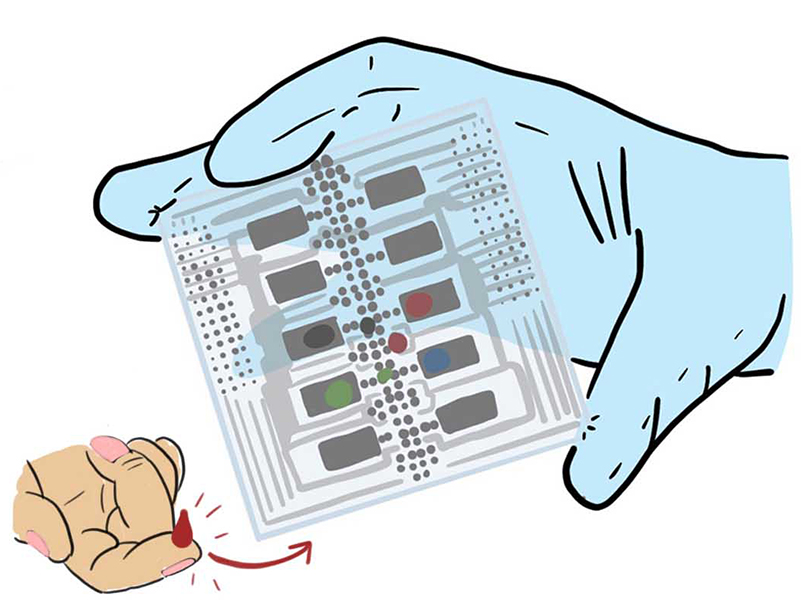
A New Way to Monitor Heart Patients
“Lab on a chip” technology will reduce travel expenses and improve care for those living in remote communities Read More
A New Way to Protect Your Teeth
A U of T alum’s dental chew aims to tackle one of the world’s most widespread – and overlooked – health problems Read More
She Designed a Water-Purifying Molecule at 17
Now a U of T student, Diana Virgovicova is using AI to help tackle global water pollution Read More