


Inside Victoria College on the University of Toronto’s St. George campus, a room has been transformed into an 18th-century sailing ship. At the Temerty Faculty of Medicine, a cartoon avatar guides students through the human body. And at U of T Mississauga, a new outdoor site will soon let students walk through geological time.
These initiatives are part of a broader wave of U of T educators rethinking what a classroom can – and should – do. Across the three campuses, many are exploring creative ways to engage students and deepen learning.
Elise Burton, a history of science professor, first learned about escape rooms through a project submitted by one of her PhD students, Oubai Elkerdi, in a graduate seminar on teaching skills.
Twice per semester, Burton now sets up an escape room assessment – either as a sailing ship or a gentleman’s study from the 1910s – complete with historical objects, sound effects and puzzles that require students to draw on course readings and lectures.
Part of what makes the experience work is the team dynamic. Unlike a group project stretched over weeks, the escape room gives students one focused hour to set aside everything else – including electronics – and work through puzzles together.
“Science is a process by which people have to come together and confront unexpected and unfamiliar situations and objects,” says Burton. “What I really want students to get out of the escape room is a new understanding of that process in all its complexities.”
Elkerdi thinks the format resonated for reasons that go beyond novelty. “We all missed analog, hands-on, in-person contact during the pandemic,” he says. Working through puzzles as a team – competing, collaborating, solving something together – is “something to be cherished.”
For Arpita Roy, a third-year materials science specialist in the Faculty of Arts and Science, the experience wasn’t about individual concepts suddenly clicking. “Instead, it felt like a synthesis – an interconnected representation of all the concepts we learned,” she says.
“The course often focuses on imperial exploitation of colonies to earn profits, and many concepts can feel separate but are in truth connected.”
One puzzle required students to use a cross-staff – an instrument once used to measure angles and calculate distances for navigation either at sea or on land. Three students in Roy’s group each got slightly different readings because of differences in their height.
“People went through excruciating months-long, years-long land surveys to create maps, and I hadn’t thought about that before this course,” says Roy.

Burton isn’t alone in rethinking what a learning experience can look like. Across campus, two professors from the Temerty Faculty of Medicine identified a similar gap – and built a game to address it.
When Judi Laprade and Kristina Lisk introduced 3D digital anatomy models in online classes during the pandemic, students pointed out a problem: anatomy is inherently three-dimensional but most teaching materials are flat.
The gap became the seed of Anat-O-MEE – short for Anatomy, Online, Map, Explore, Extrapolate – a gamified three-unit learning toolkit the pair have spent four years developing with student input.
Students move progressively from learning basic bone structure – rotating 3D models in any direction – to understanding how joints and muscles function, and finally applying what they’ve learned to actual injury scenarios.
First-year students reported that Anat-O-MEE’s 3D interactive models helped them understand anatomical structures rather than just memorize them. Several noted that being able to rotate models and switch between simplified and realistic views gave them spatial context that 2D classroom materials couldn’t.
“It’s our way of reviewing anatomy in a more fun and functional way,” says Laprade, an associate professor, teaching stream, in the department of surgery. “The material tends to stick more when students apply it in real-life scenarios.”
At U of T Mississauga, Jessica Slomka, a lab and field coordinator in the department of chemical and physical sciences, is tackling different challenges: how to give students meaningful field experience when trips off campus have become costly and how to boost student interaction.
Having taught the same course before, during and after the pandemic, she found her post-pandemic students quieter and more hesitant, struggling with the informal give-and-take of group work. She hopes the field site will help build their confidence and foster a stronger sense of community among students and staff.
Currently in development and slated to open this fall outside the William G. Davis Building, the UTM outdoor field site will bring the field to students – literally. Where students once handled small rock samples on a lab tray with little sense of how they related to one another, they will now observe, measure and examine boulders arranged along a geological timeline – from billion-year-old Canadian Shield granites to Paleozoic bedrock laid down some 500 million years ago.
Slomka and her team worked closely with the Office of Indigenous Initiatives and an Indigenous pedagogical advisor from the community to weave Indigenous language, traditional knowledge and storytelling into the site itself. Staff and faculty from anthropology, geography, geomatics and environment, biology and earth sciences also collaborated on the project.
Accompanying the site is a digital field guide – an interactive, publicly accessible map of the U of T Mississauga campus and surrounding area. It will support student learning when accessibility challenges arise. “It’ll have interactive maps, data sets, videos and 3D models of our rocks so students can still get that sense of being in the field,” she says.
When the project is complete, Slomka says at least 10 first- and second-year courses will use the site. It will also be open to the campus community to explore.
“Sitting in a classroom is passive,” she notes. “It doesn’t provide context – how do we take that theory and apply it in a way that a professional geoscientist would tackle scientific problems?”
Most Popular
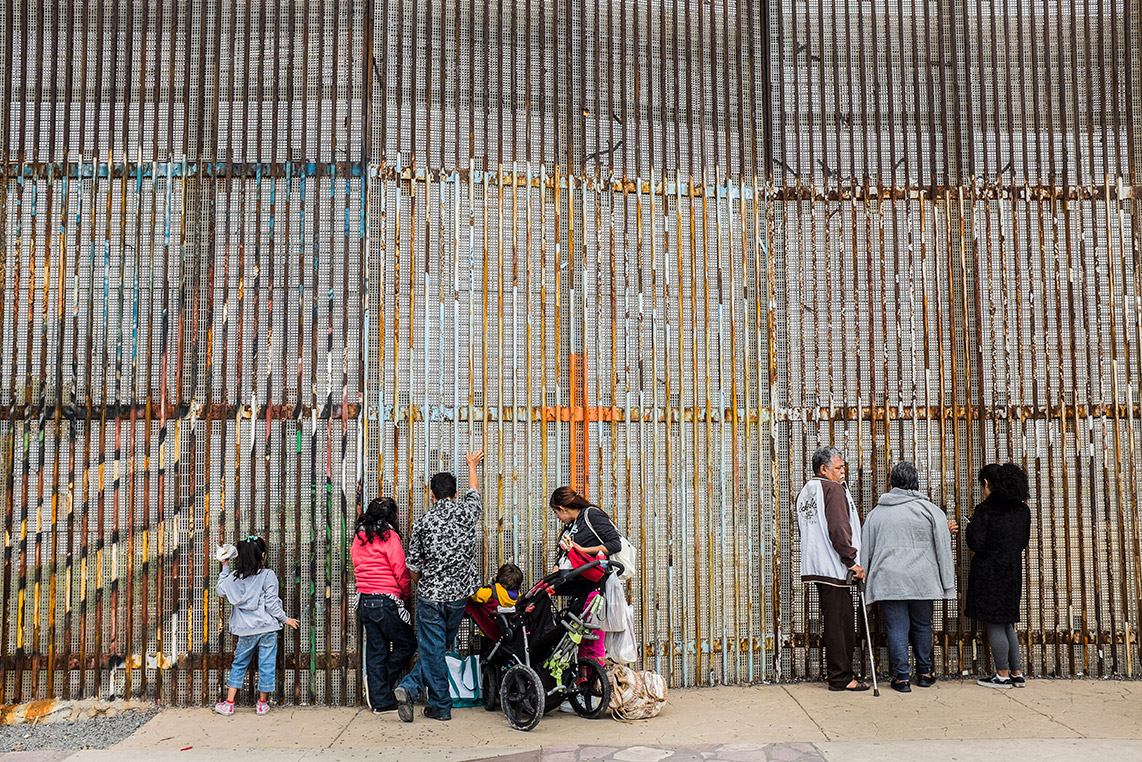
What Do Borders Really Do?
Lines on a map confer advantages on some and exclude others. This serves political needs, but is it morally just? Read More

She Designed a Water-Purifying Molecule at 17
Now a U of T student, Diana Virgovicova is using AI to help tackle global water pollution Read More

Solving a Climate Puzzle, One Tree Ring at a Time
A natural archive reveals how Canada’s arctic climate has changed over the past 1,000 years Read More

No Responses to “ How To Engage Today’s Students? Try An Escape Room ”
Wonderful innovations. I remember when taking anatomy in the 1960s that being able to explore a real human body was so much more clarifying than lectures or even Grant's Anatomy Atlas. I understand human cadavers are not as available due to cremations. The AI travel through the body sounds like a great alternative.